
Quail Release
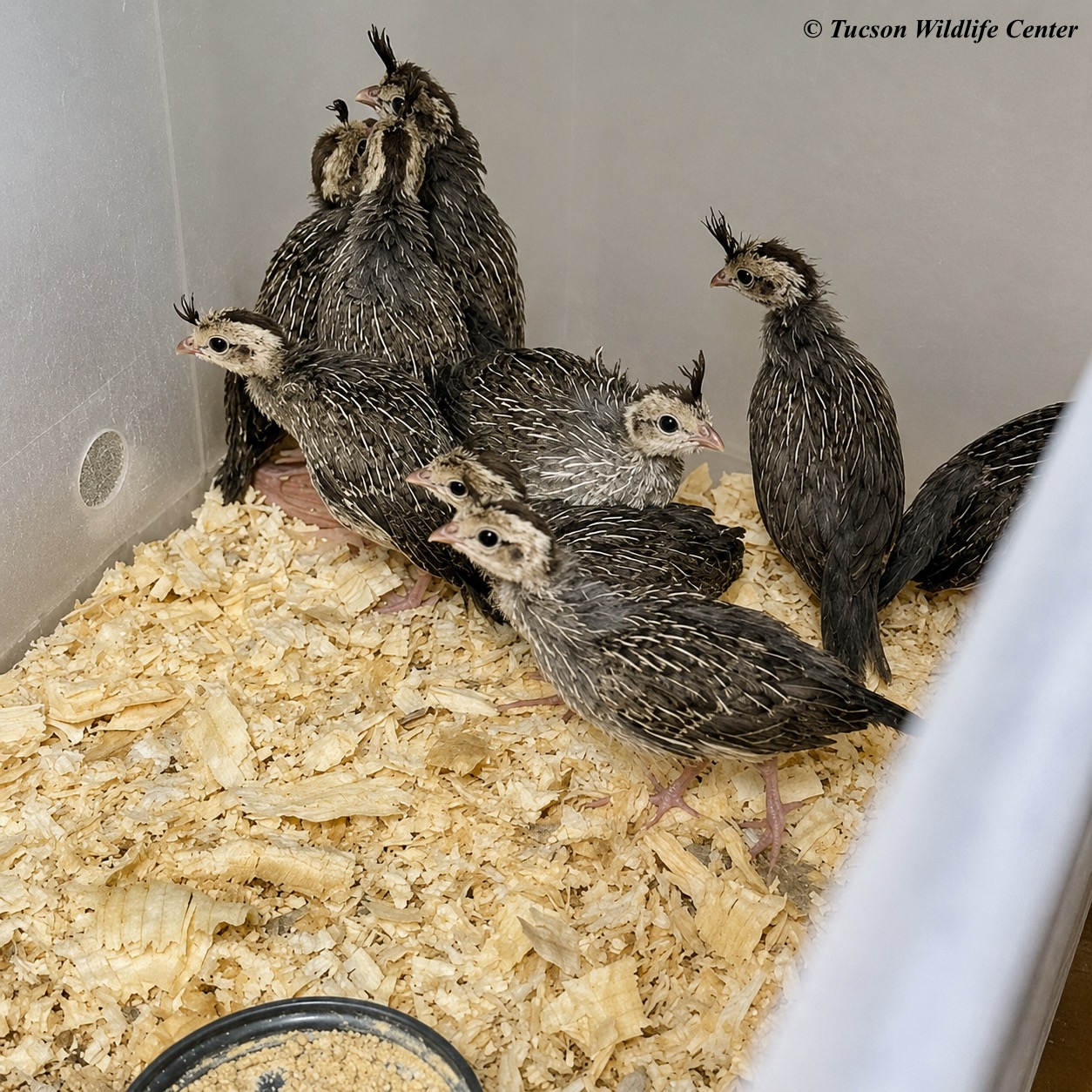
One moment they are all together, and the next they are racing in every direction (see video). While it may look like chaos, it is exactly what healthy young quail are supposed to do. The chicks in this video are just a few of the more than 750 baby quail Tucson Wildlife Center has admitted this year. We currently have 142 still in our care.
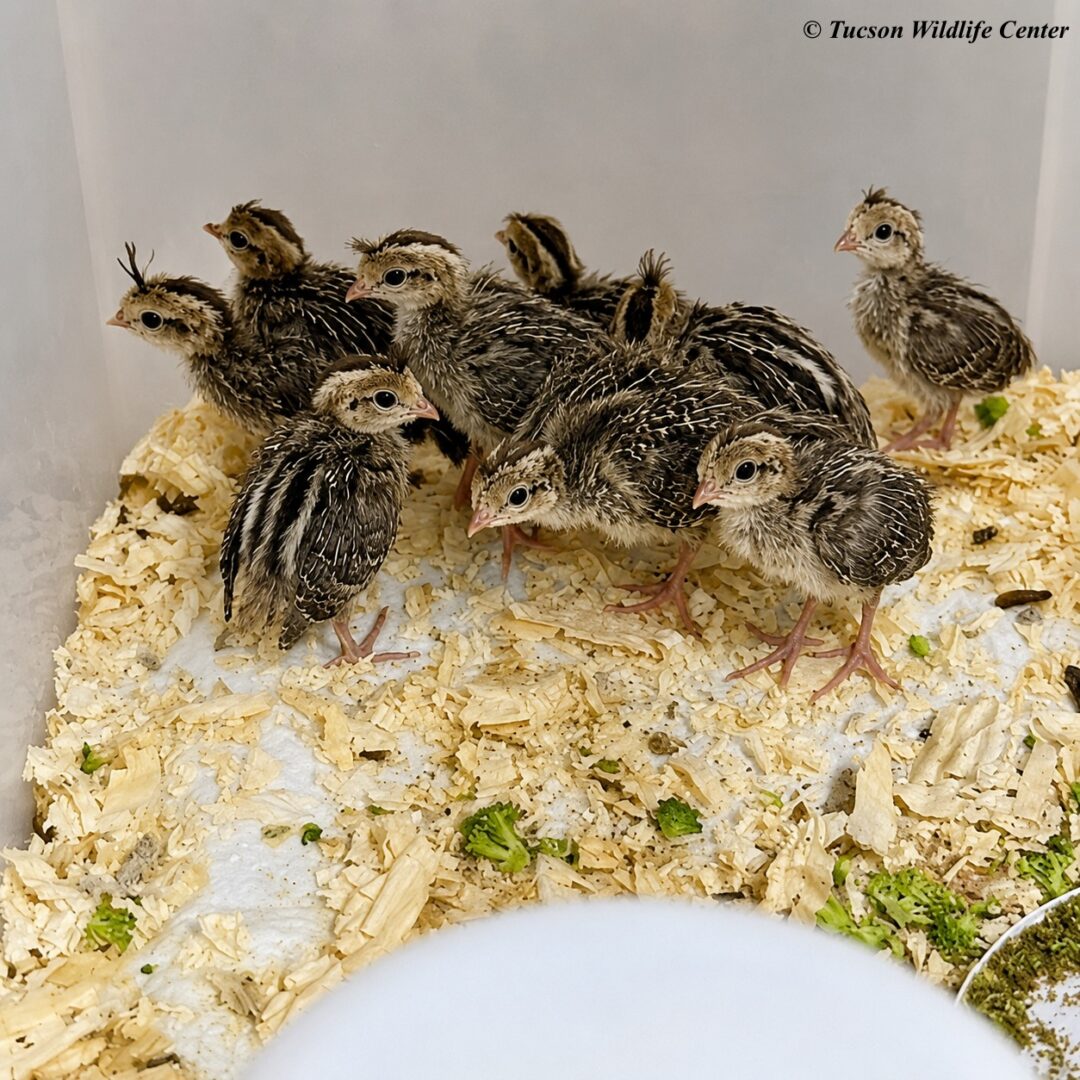
Gambel’s quail are a precocial species, meaning they are ready to leave the nest almost immediately after hatching. Within hours, they are following their parents and learning the skills they need to survive. Because of this, TWC has a great deal of success raising orphaned quail in small coveys and releasing them back into the wild together.
Before they are released, there are a few important steps involved. Depending on their age when they arrive, the quail spend about 4-6 weeks in our indoor quail room. Once they reach a weight of about 35 grams, they are moved to an outdoor acclimation pen where they begin adjusting to life outside. Having spent several weeks being raised indoors, this is the first time since arriving at TWC that they have set foot on natural ground.
When they reach 50-60 grams, they are ready for approval from our veterinary team to be released back into the wild. The release itself may look a little chaotic as the quail instinctively dash for cover, but before long they will regroup and continue as a covey—a wonderful sight after weeks of care and rehabilitation.
If you find a baby quail (or any young wild animal) alone, please resist the urge to rescue it right away. The parents are usually nearby, and the youngster will often be reunited if given the opportunity. If you are unsure whether you should intervene, give TWC a call for advice on next steps. A quick phone call can help prevent the accidental orphaning of healthy young wildlife.
Please note: Tucson Wildlife Center is always looking for landowners with suitable habitat who may be interested in providing release sites for rehabilitated wildlife. If you would like to help patients like these quail,click this link to donate,
Another way you can contribute is to visit our “wish list” on Amazon or Chewy below:
We appreciate it, as will all the wild animals in our care!
#tucsonwildlifecenter #wildliferehabber #tucsonnativewildlife #tucsonanimals #AZnativeanimals #wildliferehabilitation

Show your support with a minimum $25 donation and we’ll send you a “KEEP TUCSON WILD” sticker. Click the bumper sticker to donate.