

Protecting Bats this Summer
As the sun sets, one of the desert’s most important groups of wildlife begins it work. Bats emerge each evening to feed, with some helping control insect populations while others play a vital role in pollinating iconic desert plants like saguaros and agaves.
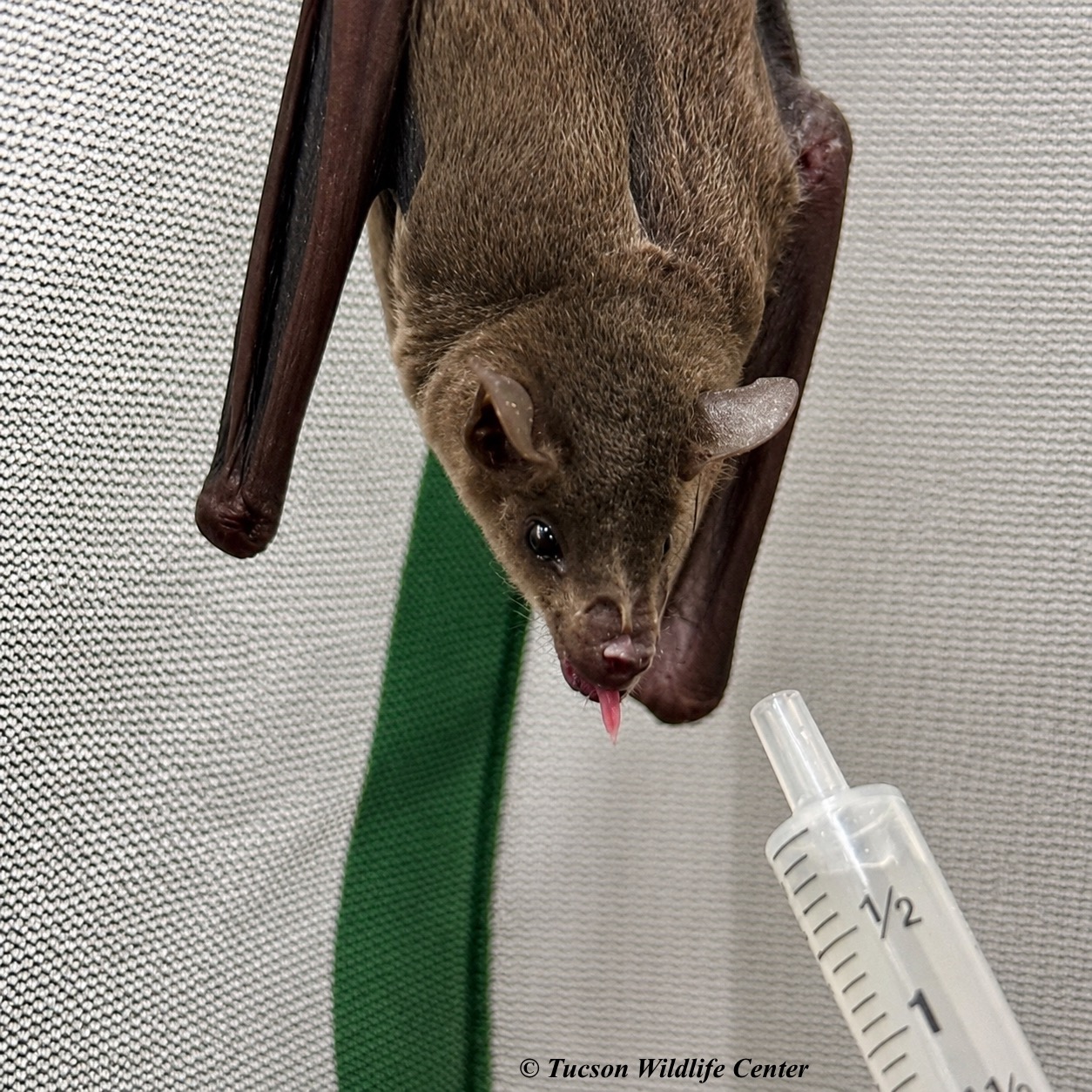
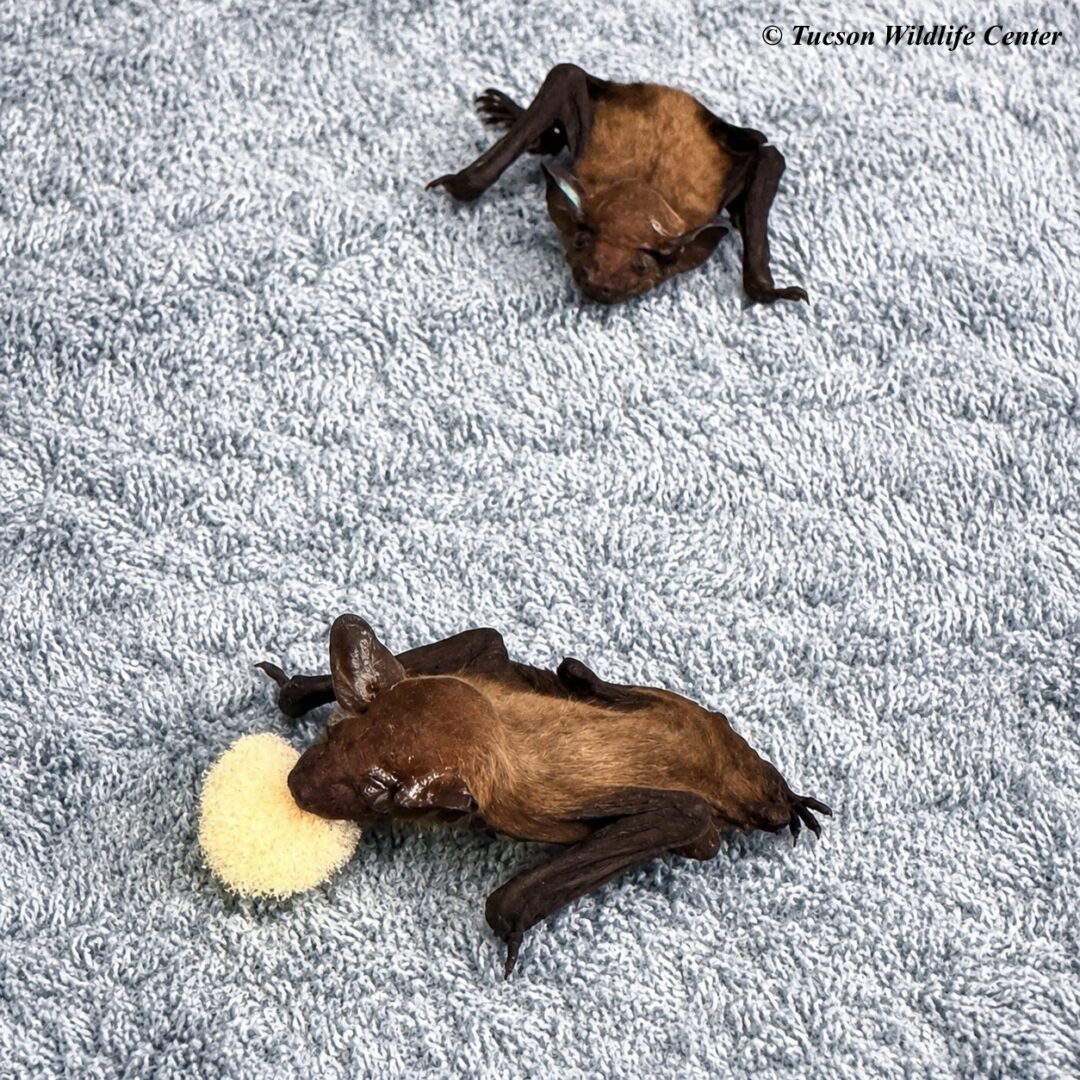
Right now, Tucson Wildlife Center is caring for 25 young bats, all of which require specialized care until they are old enough to return to the wild. The video highlights two different feeding techniques. The lesser long-nosed bat is a nectar-feeding pollinator, so it is fed specialized formula by syringe. Our insect-eating bat pups are offered formula on a small sponge while they are young and will gradually transition to eating insects as they grow.
This time of year is also when we admit many bats with injuries caused by a hazard most people never think about—outdoor ceiling fans. Last year alone, we admitted 10 lesser long-nosed bats from a single home after a fan was inadvertently left running overnight. Despite every effort by our veterinary team, none survived their injuries.
You can help protect bats by turning off outdoor ceiling fans whenever they are not in use, especially overnight. Reducing unnecessary outdoor lighting also helps, as lights attract insects and may draw foraging bats closer to homes. If you find a bat on the ground that appears injured, keep children and pets away and contact TWC for guidance. If you would like to help patients like these bats, click this link to donate,
Another way you can contribute is to visit our “wish list” on Amazon or Chewy below:
We appreciate it, as will all the wild animals in our care!
#tucsonwildlifecenter #wildliferehabber #tucsonnativewildlife #tucsonanimals #AZnativeanimals #wildliferehabilitation

Show your support with a minimum $25 donation and we’ll send you a “KEEP TUCSON WILD” sticker. Click the bumper sticker to donate.