
Red-naped Sapsucker
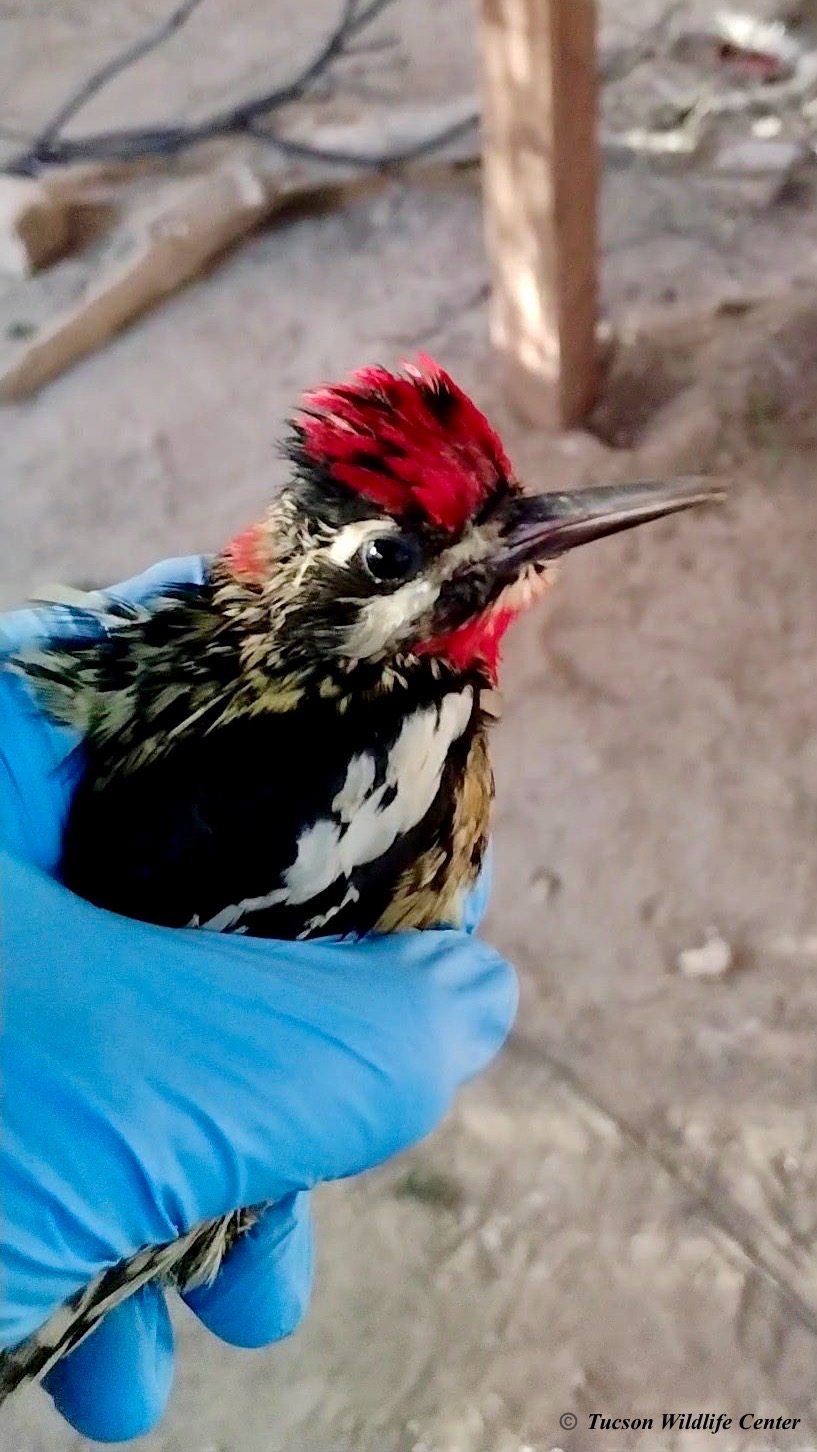
This beautiful Red-naped Sapsucker was brought to Tucson Wildlife Center with signs of blunt-force trauma that our veterinarian suspected was from being hit by a car or striking a window. Both are common hazards for migrating birds. On intake, our medical team discovered a displaced coracoid fracture—an injury to a key shoulder bone that birds rely on for every wingbeat.
When the coracoid is broken, a bird cannot generate the power or stability needed for flight, making survival in the wild impossible without care. With rest, supportive treatments, and time to heal, this sapsucker’s fracture gradually stabilized. Once healed, she was moved to an outdoor aviary, where our team carefully flight-tested her to ensure she could maneuver, gain lift, and sustain strong, symmetrical wingbeats.
Red-naped Sapsuckers are migratory visitors to Arizona, spending the winter in our region before heading north to breed. Thanks to immediate medical care and dedicated rehabilitation, this traveler is now back on her way—released to continue her journey in the wild.
Fun facts: Although they are woodpeckers, sapsuckers are unique. Unlike most woodpeckers that drill for insects hidden deep in wood, sapsuckers create neat rows of “sap wells” in tree bark to drink the sap and eat the insects it attracts.
These sap wells become tiny ecosystems—supporting hummingbirds, warblers, and other wildlife that also come to feed. While in care at TWC, this sapsucker was fed a tree sap often enjoyed by humans—maple syrup. If you would like to help patients like this Red-naped Sapsucker, click this link to donate,
Another way you can contribute is to visit our “wish list” on Amazon or Chewy below:
We appreciate it, as will all the wild animals in our care!
#tucsonwildlifecenter#wildliferehabber#tucsonnativewildlife#tucsonanimals#AZnativeanimals#wildliferehabilitation

Show your support with a minimum $25 donation and we’ll send you a “KEEP TUCSON WILD” sticker. Click the bumper sticker to donate.