Patient of the Week – A Common Poorwill’s Return to the Wild
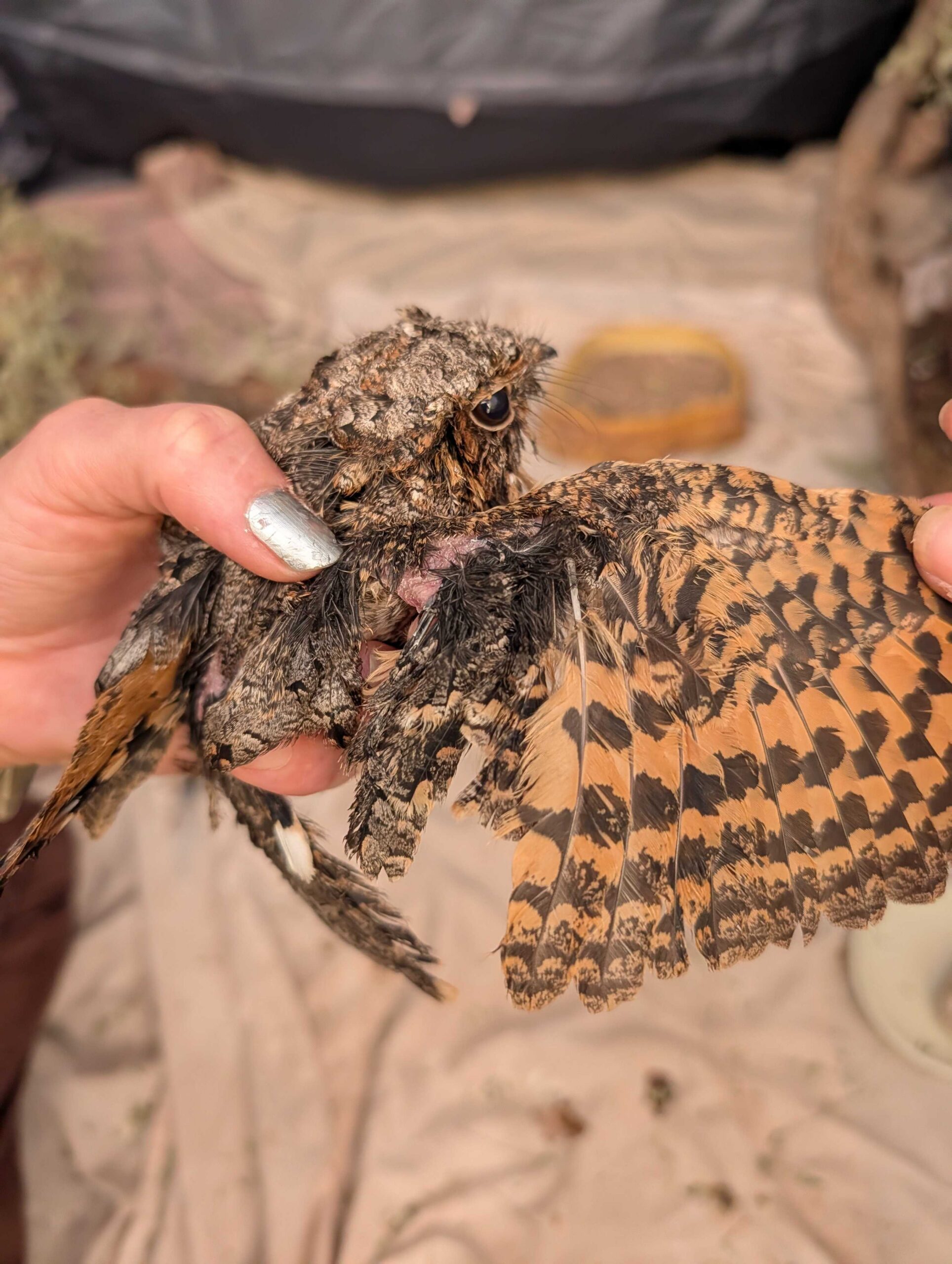
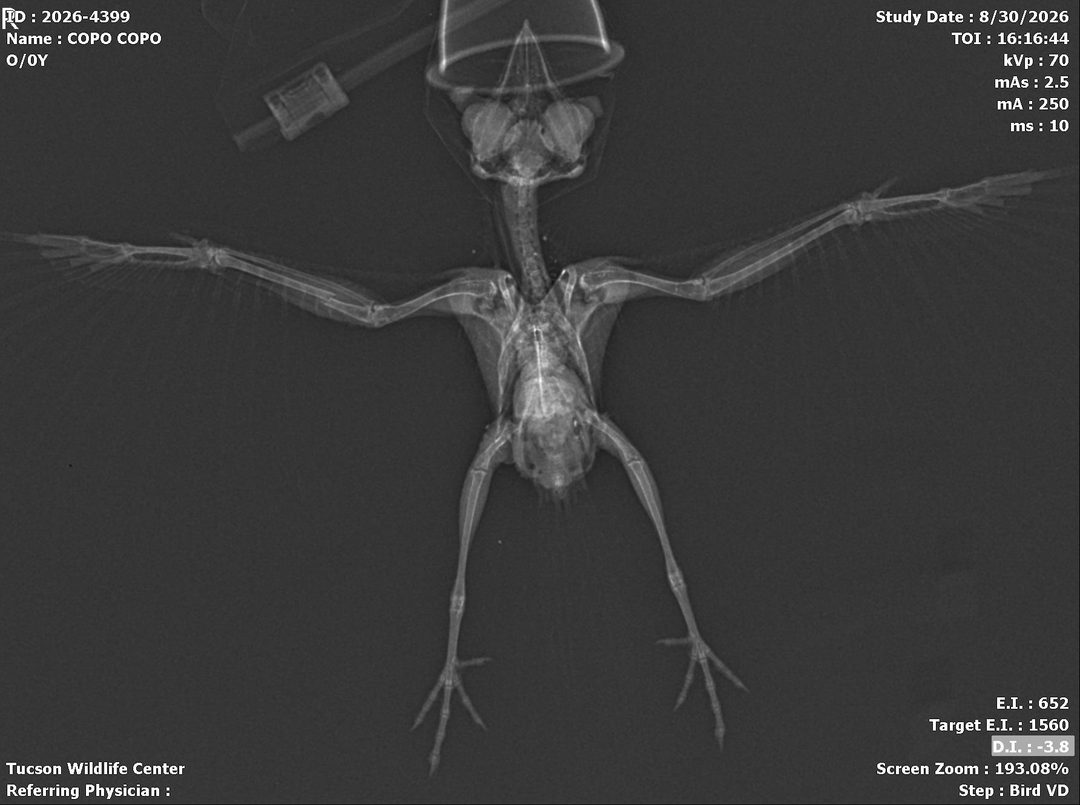
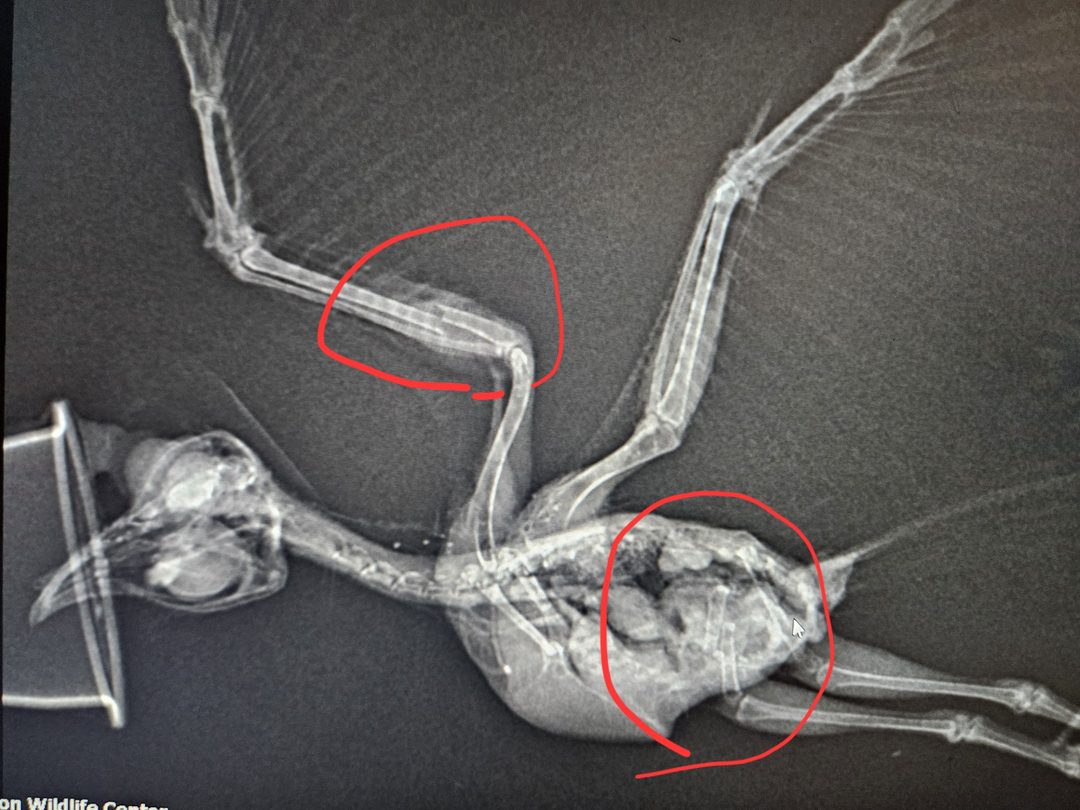
A small bird with extraordinary camouflage caught a passerby’s attention as he was lying beside a road in broad daylight. He was found on the ground with signs of blunt trauma suspected to have been caused by a vehicle collision. On intake exam there were signs of head trauma, broken bones in the right wing and leg and damage to the flight feathers. We performed radiographs which showed both ulna and a femur fracture which were able to be surgically repaired with pins.
After a few weeks in care the bones healed and once his feathers regrew, he was released back into the wild.
Through his time in care, he was a staff favorite with a big attitude for such a small bird.
Common nighthawks are year-round residents of southern Arizona, and the only bird known to be able to go into prolonged periods of torpor that can almost be considered hibernation, in the winter. This strategy allows them to conserve energy when the flying insects they eat disappear.
Males can be distinguished from females by the spots on the edge of their tail feathers, females have darker tan spots and males are bright white.
Common Poorwills are members of the nightjar family, with mottled gray and brown plumage that helps them disappear against rocky ground and desert soil. Active mainly at dusk and at night, they catch insects with surprisingly wide mouths.
After almost two months in care, this patient was released. His journey from a roadside rescue to a return to the wild reminds us of the difference one observant person can make, and the patience wildlife rehabilitation requires. Sometimes, a second chance means giving a small bird excellent veterinarian care and enough time to heal, regain strength, and grow the feathers that will carry him home.
If you would like to help support TWC by donating or contributing to our wish lists, please click the links below.
#tucsonwildlifecenter #wildliferehabber #tucsonnativewildlife #tucsonanimals #AZnativeanimals #wildliferehabilitation

Show your support with a minimum $25 donation and we’ll send you a “KEEP TUCSON WILD” sticker. Click the bumper sticker to donate.