A Red-tailed Hawk’s Long Road to Recovery
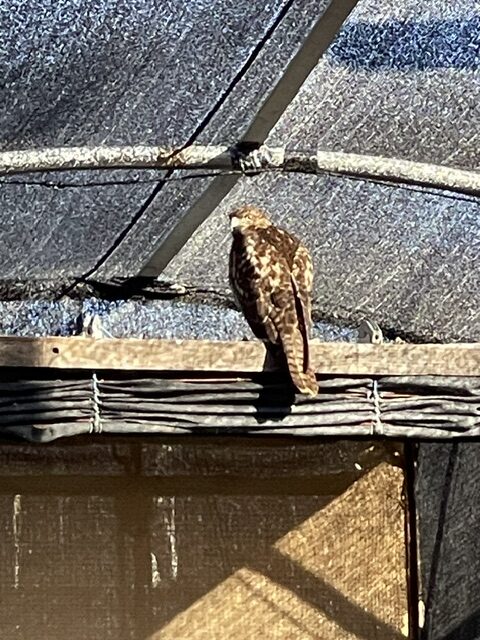
Found on the ground beside a road in Sells, Arizona, this red-tailed hawk arrived at Tucson Wildlife Center in June thin and with avian pox lesions on his feet and near his beak. Those lesions have healed, but his recovery is still underway, and there is still a need for continued care.
He is now in a flight pen, where the team can assess his movement and keep a close eye on his healing. Strong feet matter just as much as strong wings for a hawk: red-tail hawks often watch for prey from a high perch, then swoop down to grab it with their talons. Their broad wings help them soar on rising air with little flapping.
So, what is avian pox? Avian pox is a viral disease of birds that can produce raised lesions on areas without feathers, such as the feet, legs, and skin around the beak or eyes. Mosquitoes and other biting insects can spread it; birds can also encounter the virus through direct contact or contaminated surfaces.
TWC helps protect the birds in their care by separating birds with suspected contagious disease, cleaning and disinfecting shared equipment and enclosures, and limiting mosquito exposure. Those precautions help reduce opportunities for the virus to spread while a patient receives care. This hawk’s pox lesions have healed, but his team will continue monitor his progress and observe its flight before deciding when he is ready to return to the wild. As with all our patients, we always attempt to release our animals as close as possible to where they were found. This red-tailed hawk will once again soar over the land of the Tohono Oʼodham Nation.
Red-tail bonus fact: That dramatic hawk cry that is often heard in movies is often a red-tailed hawk’s call, even when the bird on screen is another species!
#tucsonwildlifecenter #wildliferehabber #tucsonnativewildlife #tucsonanimals #AZnativeanimals #wildliferehabilitation

Show your support with a minimum $25 donation and we’ll send you a “KEEP TUCSON WILD” sticker. Click the bumper sticker to donate.