
Avian Disease
After enjoying a mild winter with higher-than-normal temperatures and increased rainfall in the region, Tucson Wildlife Center is currently seeing an increase in the number of songbirds and raptors being brought into care with contagious diseases such as avian pox.
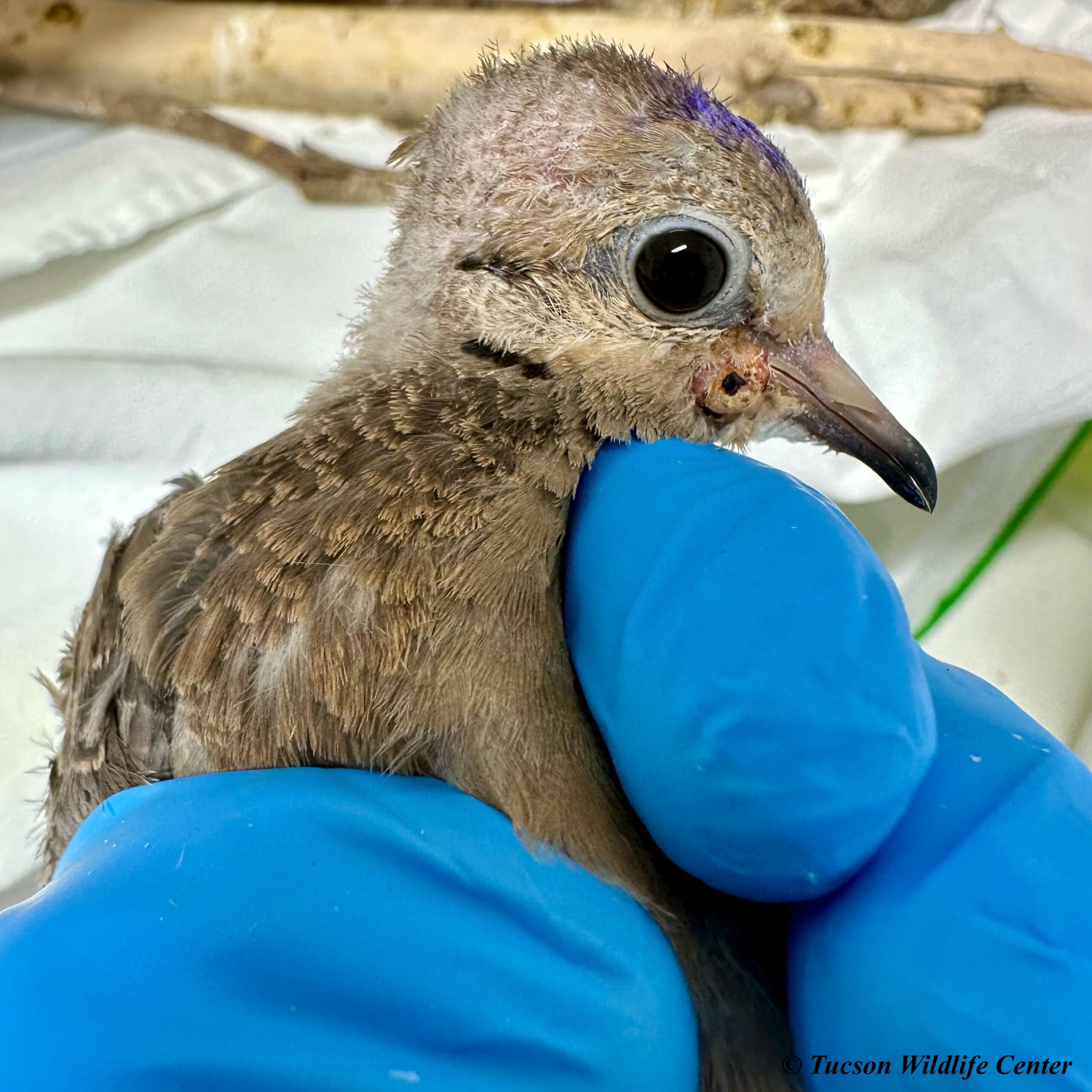
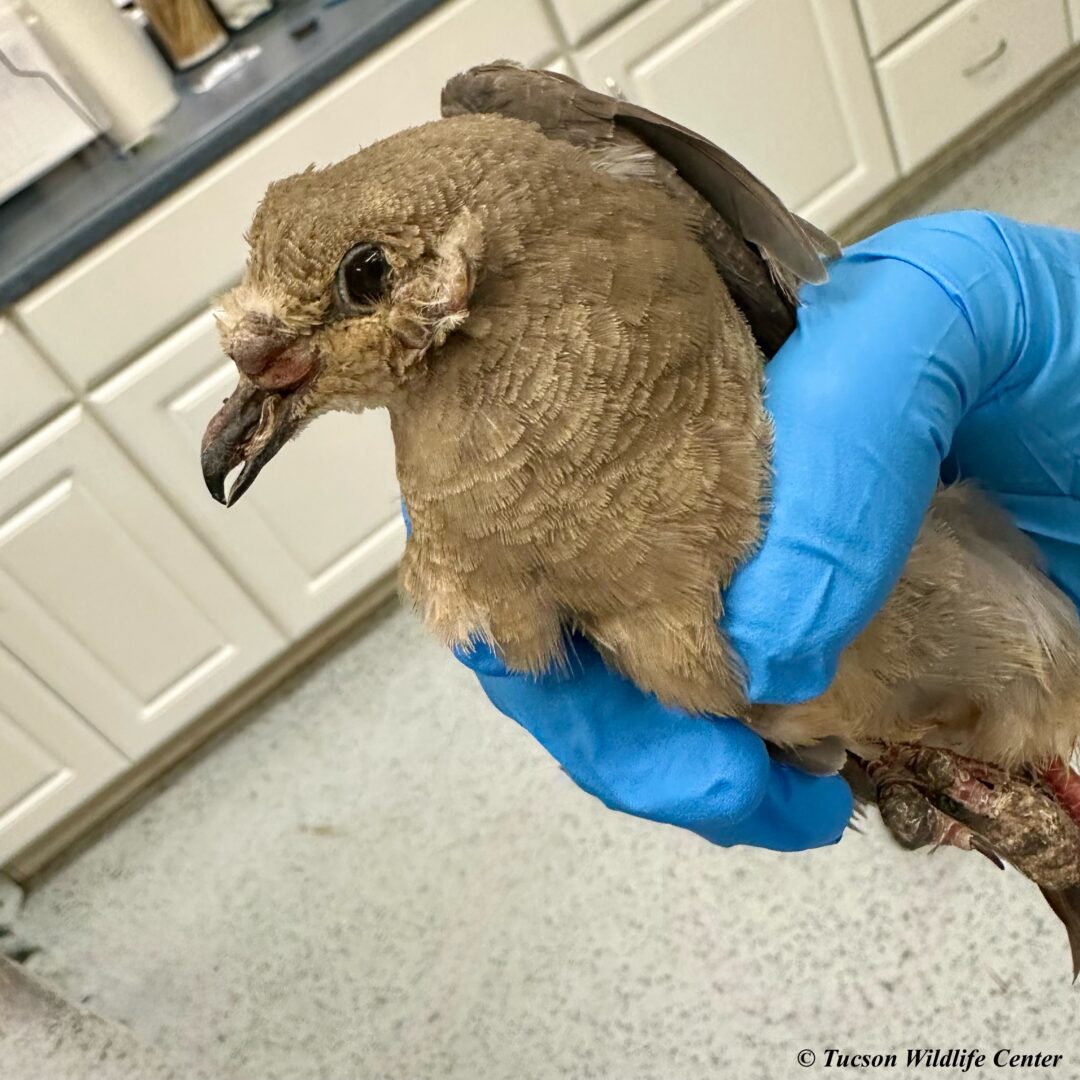
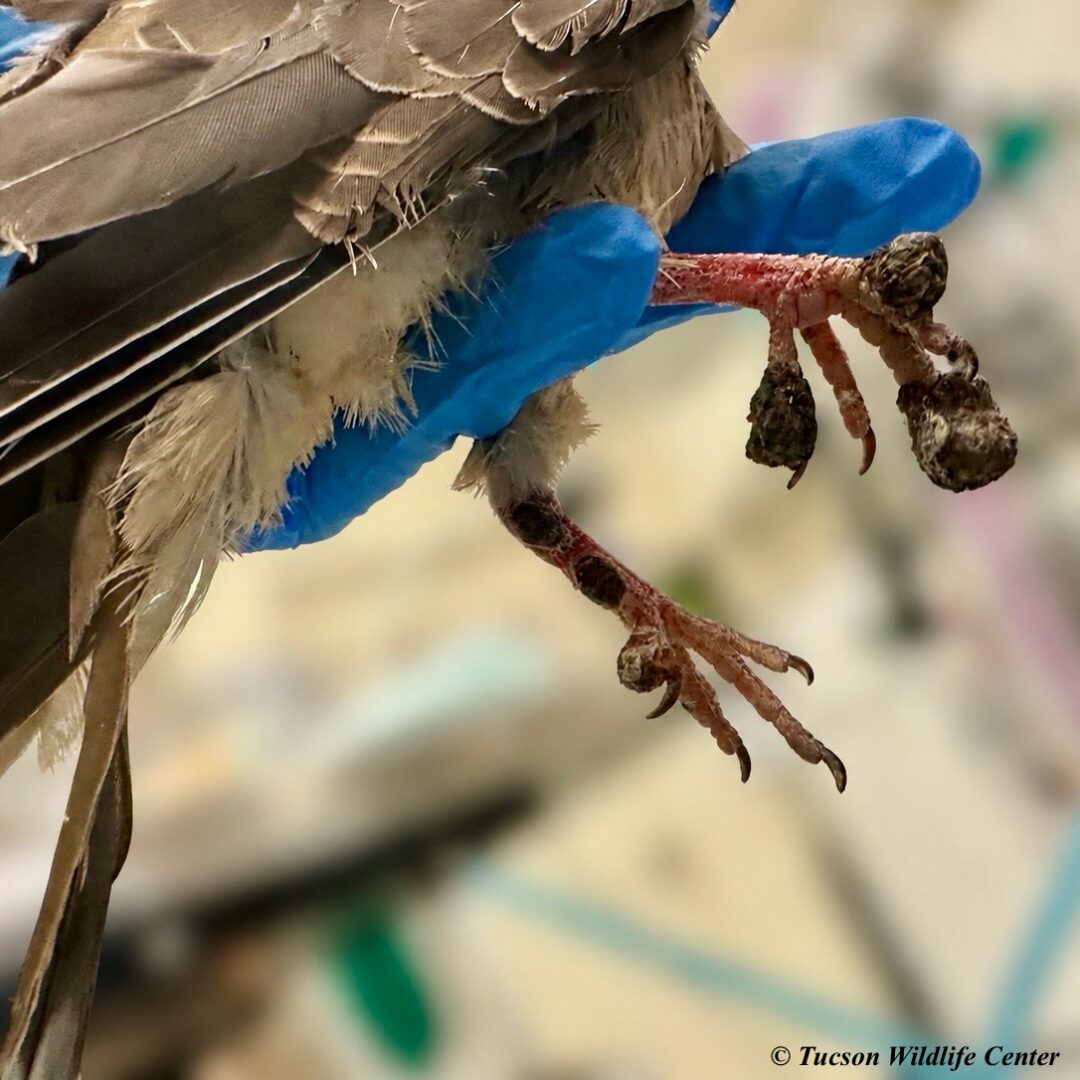
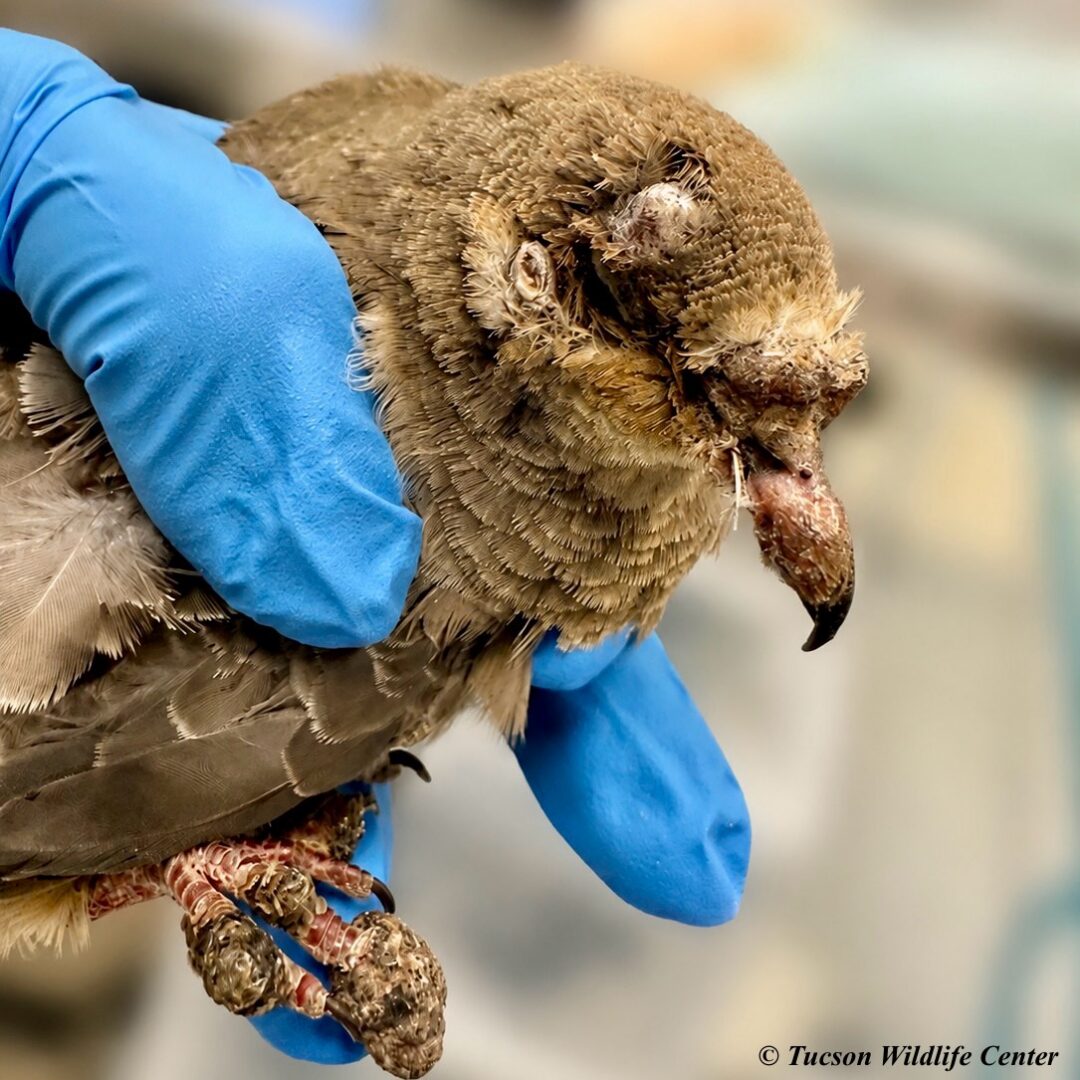
Avian pox is a viral disease that can appear in two forms: dry and wet. The dry form causes wart-like skin lesions, often seen on the legs, around the eyes, or near the base of the beak. While treatable, recovery can take an extended period.
The wet form of the virus affects the mucus membranes of the mouth and throat, where lesions can make it difficult for a bird to eat or breathe. These cases are much more serious and often have a poor prognosis.
Avian pox is spread by mosquitoes, direct contact, and shared spaces where birds gather closely together, such as at feeders and birdbaths. Like chicken pox, it is very contagious, but birds that recover usually develop long-lasting immunity to the specific strain that infected them. While avian pox spreads readily among birds, it is not transmissible to humans or pets.
Treatment focuses on supportive care and treating any secondary bacterial infections that may occur, as these are often more serious than the pox lesions themselves. Birds with avian pox are most contagious while active lesions are present, typically for 1-6 weeks. However, the dried scabs shed from those lesions can remain infectious in the environment for months.
Removing feeders and birdbaths and cleaning them with a 10% bleach solution weekly helps sanitize these areas and encourages birds to disperse rather than gather in large groups. This small step can make a big difference in keeping our native songbird populations safe.
If you see any birds around your feeders with wart-like lesions, lethargy, or difficulty breathing, please remove feeders and birdbaths immediately and contact Tucson Wildlife Center for guidance on next steps.
Currently TWC has 10 doves in our quarantine space with avian pox. They have a long road to recovery, but we are giving them the best chance possible while also protecting the other patients in our care.
If you would like to help patients like these birds, click this link to donate, click this link to donate,
Another way you can contribute is to visit our “wish list” on Amazon or Chewy below:
We appreciate it, as will all the wild animals in our care!
#tucsonwildlifecenter #wildliferehabber #tucsonnativewildlife #tucsonanimals #AZnativeanimals #wildliferehabilitation

Show your support with a minimum $25 donation and we’ll send you a “KEEP TUCSON WILD” sticker. Click the bumper sticker to donate.