Western Screech Owl
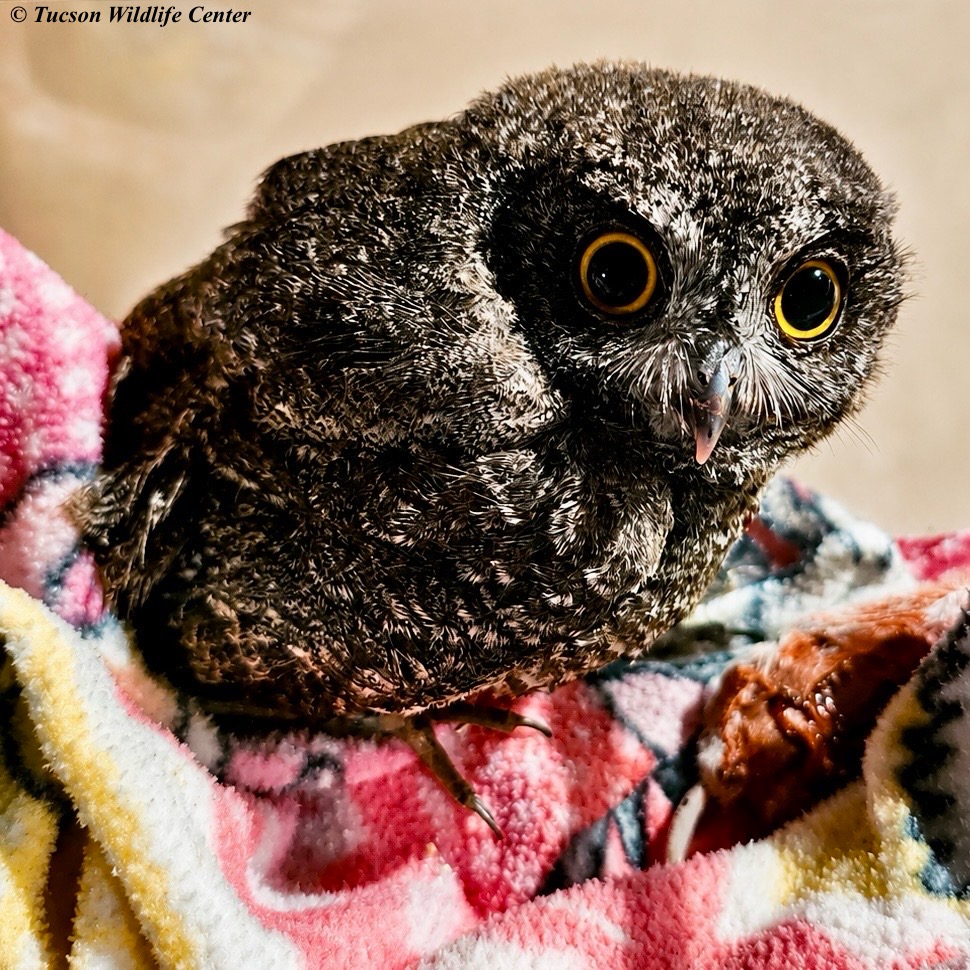
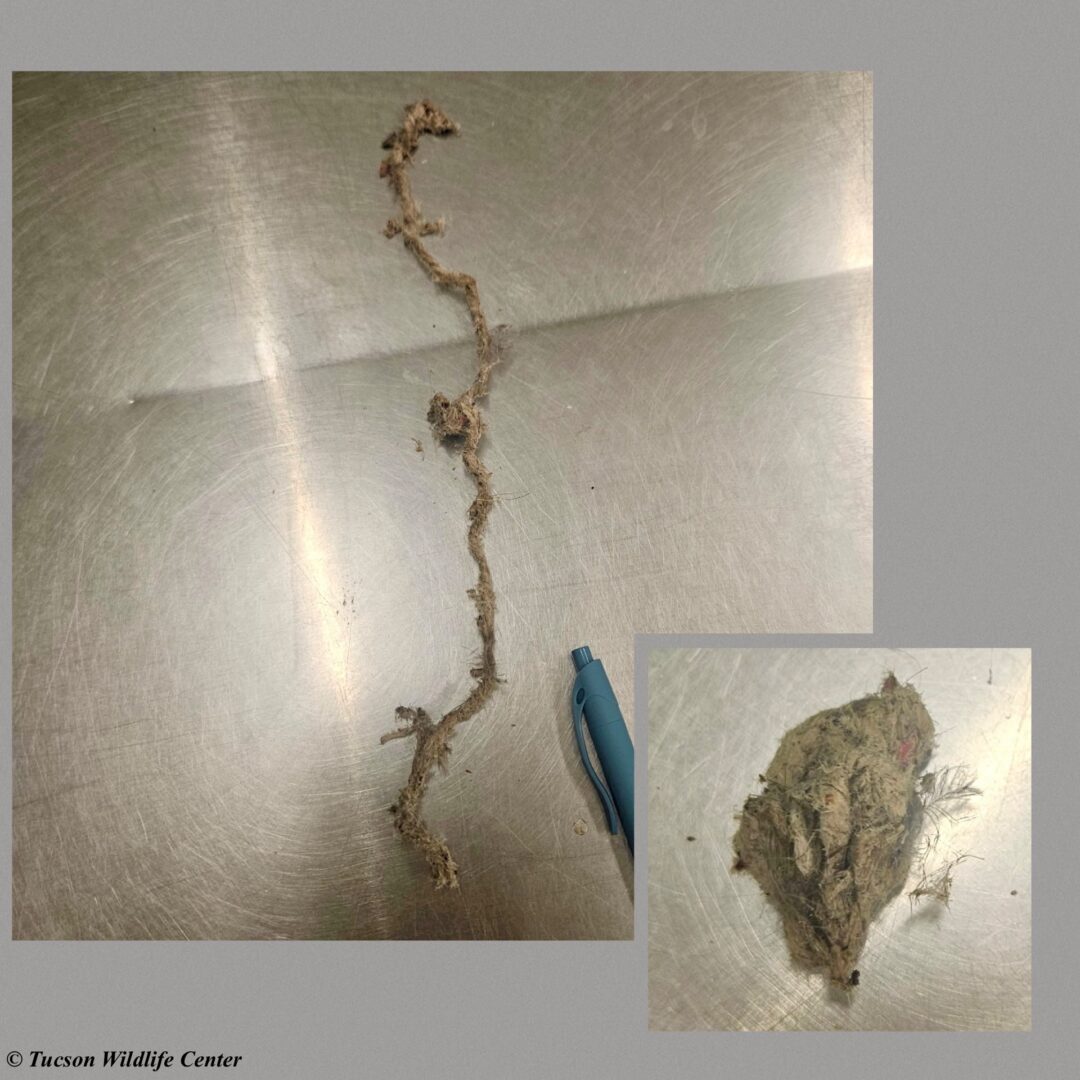
A young Western Screech Owl recently was brought to Tucson Wildlife Center after swallowing a piece of sisal rope—likely picked up accidentally while grabbing prey. When he first arrived, part of the rope was still protruding from his mouth. Unfortunately, once the visible section was cut, the owl swallowed the remaining piece.
Linear foreign bodies, such as string, rope, fishing line or thread, can be especially dangerous for wildlife. Unlike solid objects, long strands can move through the digestive tract while remaining anchored in one place, creating a “sawing” motion that can cut or perforate tissue as the intestines contract and move. In many species, this can quickly become life-threatening.
Fortunately, birds of prey have a unique digestive adaptation that helped this owl. Raptors grind food material in the ventriculus (part of the stomach) and later regurgitate indigestible material in the form of pellets or casts. If a linear foreign body does not pass beyond the ventriculus into the intestines, the prognosis can be positive.
Our veterinary team monitored this little owl closely while waiting to see whether he could safely pass the rope on his own. Thankfully, he eventually regurgitated a pellet containing the piece of rope, avoiding the need for surgery and eliminating the risk of intestinal injury.
Now fully recovered, this Western Screech Owl has been released back into the wild. Cases like this are an important reminder that even materials that seem harmless—rope, string, netting, fishing line, and similar debris—can pose serious risks to wildlife. Proper disposal of these items can help prevent injuries to birds and other animals. If you would like to help patients like this Western Screech Owl, click this link to donate,
Another way you can contribute is to visit our “wish list” on Amazon or Chewy below:
We appreciate it, as will all the wild animals in our care!
#tucsonwildlifecenter #wildliferehabber #tucsonnativewildlife #tucsonanimals #AZnativeanimals #wildliferehabilitation

Show your support with a minimum $25 donation and we’ll send you a “KEEP TUCSON WILD” sticker. Click the bumper sticker to donate.