Window Strike Patients
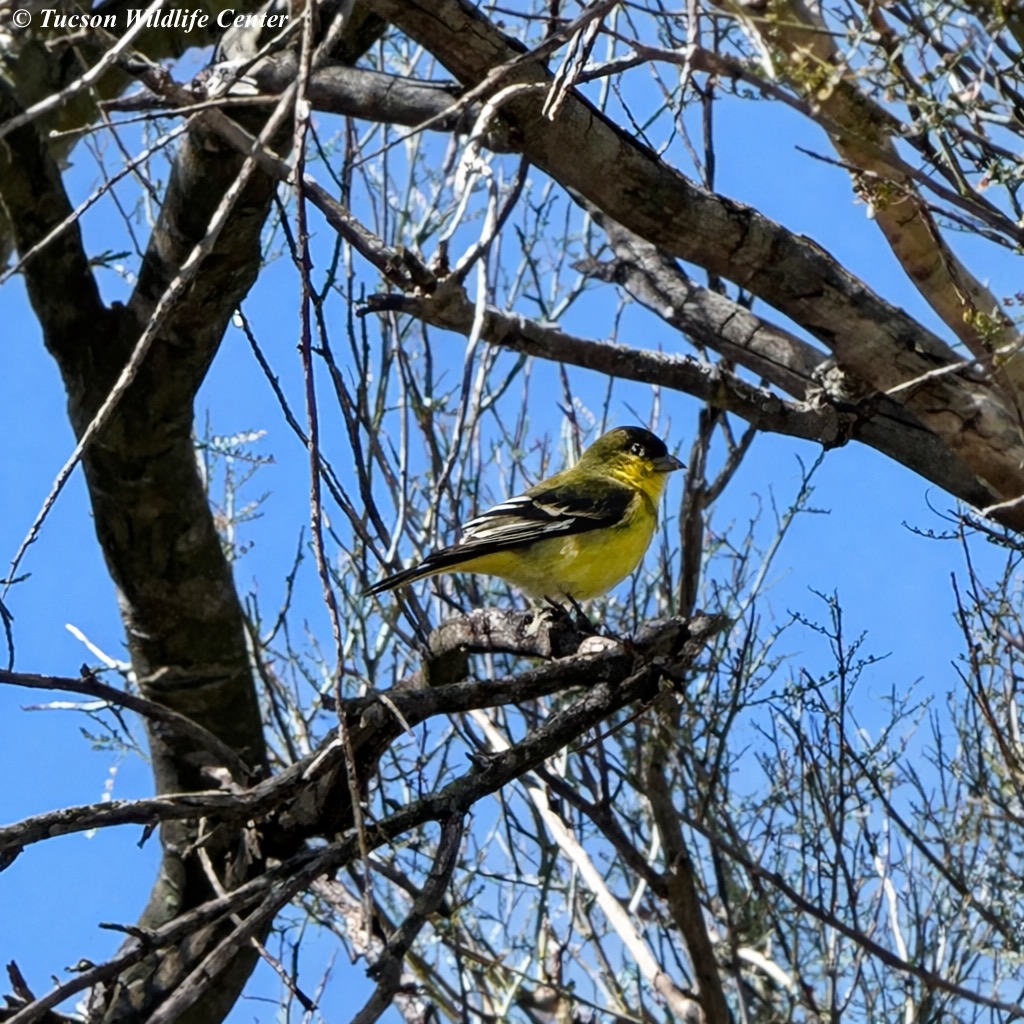
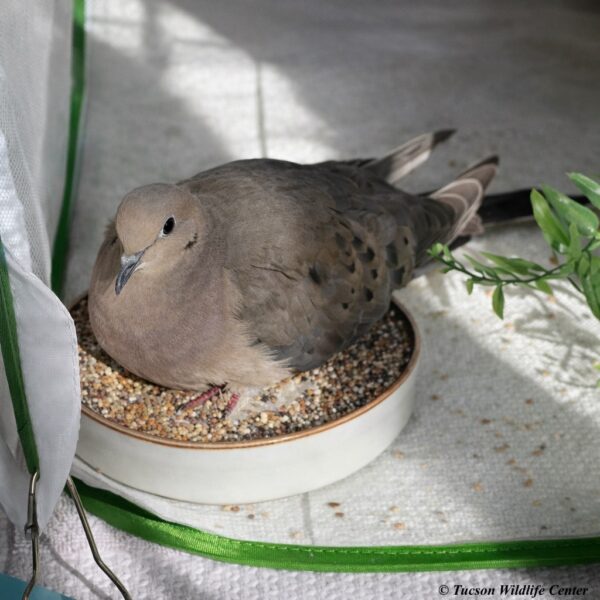
Recently, a lesser goldfinch, a house finch, and a mourning dove were admitted to Tucson Wildlife Center for injuries sustained from window strikes. The goldfinch arrived with a fractured coracoid that required several weeks of cage rest; the finch suffered mild head trauma and was stunned and unable to fly for several days; and the dove was showing signs of head trauma and was reluctant to perch or fly.
In the past, the common recommendation for birds that hit windows was to place them in a box in a dark, quiet space for about an hour. If the bird did not fly away after that time, finders were encouraged to bring it to TWC for care. Based on newer research, our advice has changed.
Recent studies have shown that brain swelling can occur up to 24 hours after a window strike. Even if a bird appears to recover and flies away shortly after the collision, it does not necessarily mean it was not injured. Some birds later succumb to injuries that were not immediately visible.
Because of this, we are now asking the public to bring all window strike birds to TWC as soon as possible so they can be evaluated. Window strike patients are treated for potential brain swelling with anti-inflammatory medications. They are also placed on oxygen therapy and closely monitored for 48-72 hours.
Window strikes are incredibly common, but they are also one of the most preventable causes of injury in birds. Birds hit windows because they see reflections of trees or sky. The most effective solution is to place visible patterns on the outside of the glass. Good options include window clings or decals, tempera paint or window markers, and tape or dot patterns—with patterns placed no more than 2-inches apart horizontally and 4-inches apart vertically.
Taking a few simple steps to make your windows bird-safe can prevent these injuries and save lives. And to help prevent vehicle window strikes, please drive with caution. Spring has come early—fledglings (birds and bats) are flying low across roads! If you would like to help patients like these birds, click this link to donate,
Another way you can contribute is to visit our “wish list” on Amazon or Chewy below:
We appreciate it, as will all the wild animals in our care!
#tucsonwildlifecenter #wildliferehabber #tucsonnativewildlife #tucsonanimals #AZnativeanimals #wildliferehabilitation

Show your support with a minimum $25 donation and we’ll send you a “KEEP TUCSON WILD” sticker. Click the bumper sticker to donate.