
American Snout Butterflies
Have you been seeing a lot of these lately?
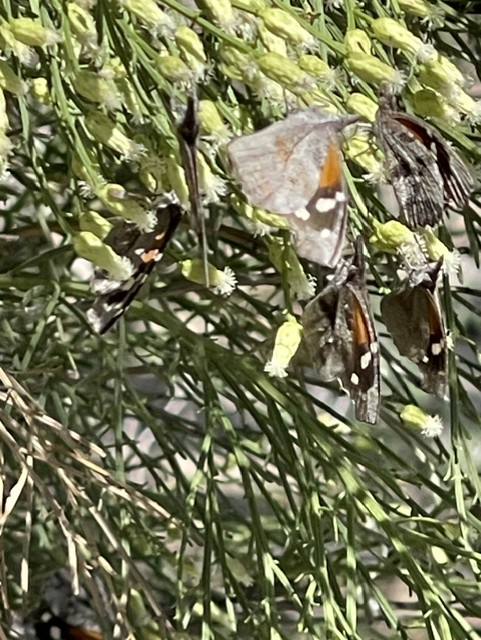
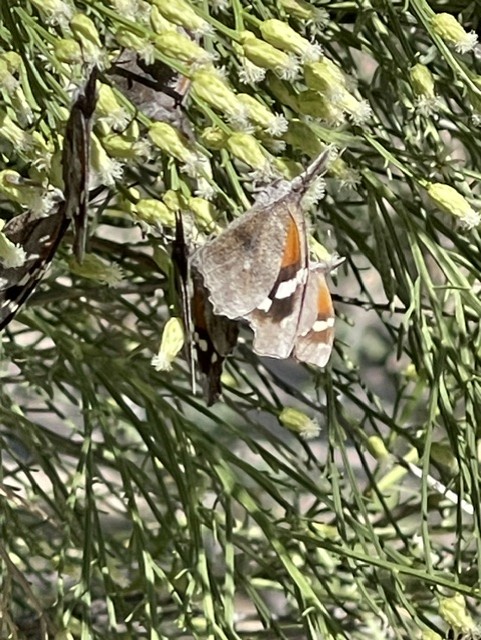
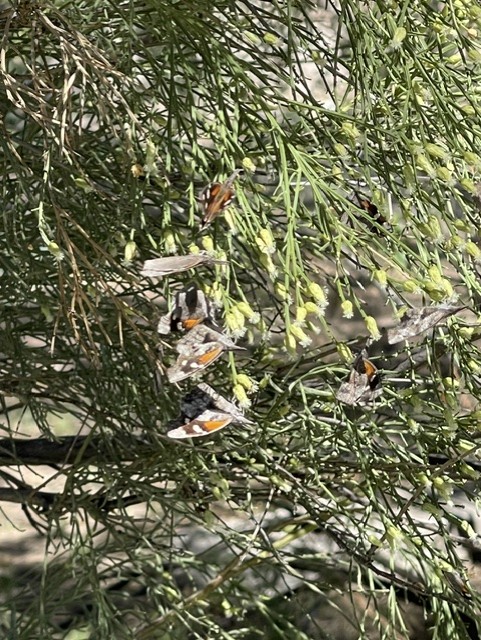
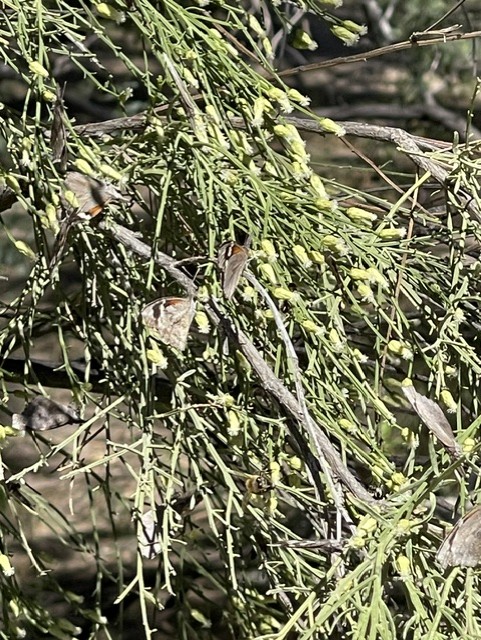
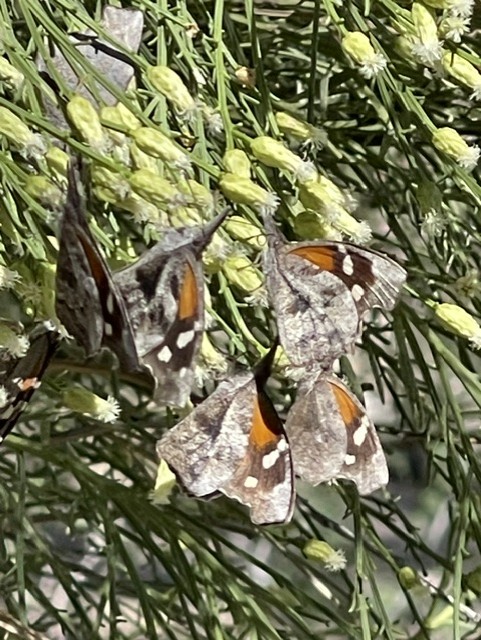
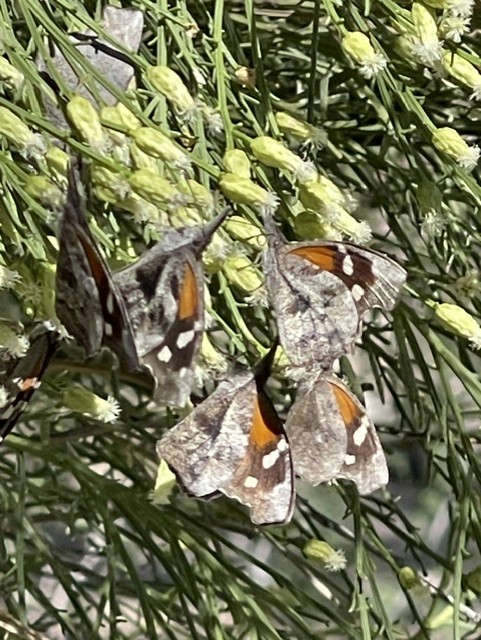
These are American Snout butterflies!
Enjoy this rare Sonoran Desert spectacle! Arizona is currently experiencing it’s largest influx of American Snout butterflies since 2021.
American Snouts are famous for massive, synchronized population explosions. When heavy rains arrive after a dry spell, their primary caterpillar host plant- the hackberry tree- pushes out fresh foliage. This abundance of food triggers localized breeding booms and migratory movements, resulting in hundreds of thousands of these butterflies suddenly gathering in yards and on flowering desert plants.
Why are so many of them clustered together?
The shrub they are seen here swarming is Desert Broom. During the late summer and fall, desert broom produces small yellowish- white blossoms that act like a magnet for local butterflies.
These butterflies are distinguished by several unique features:
1. The “Snout”: They have elongated mouthparts that extend straight out from the head, making them look like they have a long nose or stem.
2. Dead- Leaf Camouflage: When they sit with their wings closed (as you see in some of the photos below), their mottled gray- brown underwings combine with the shout to make them look exactly like a dried, dead leaf.
3. Wing Shape and Color: Their upper wings feature distinct orange patches and white spots set against a dark brown border, paired with uniquely squared- off angular forewing tips.
If you want to observe more of this migration or track the swarms beyond your own yard, local nature enthusiasts and reports from KOLD news have highlighted the top regional hotspots where they are currently gathering by the thousands.
1. Sabino Canyon & Madera Canyon: The desert streams, damp creek banks, and abundant seep willow in these mountain canyons are hosting massive ‘puddle parties’
2. Agua Caliente Park: The warm microclimate and natural waters here are drawing heavy clusters of American Snouts directly to the native vegetation.
3. Tohono Chul and Mission Garden: These botanical spaces are seeing dense swarms right at their entrances, particularly around muddy trail patches and nectar- heavy desert blooms.
Keep an eye out for them on any local desert trail- just remember to stick to the main paths to protect the fragile desert ecosystem!